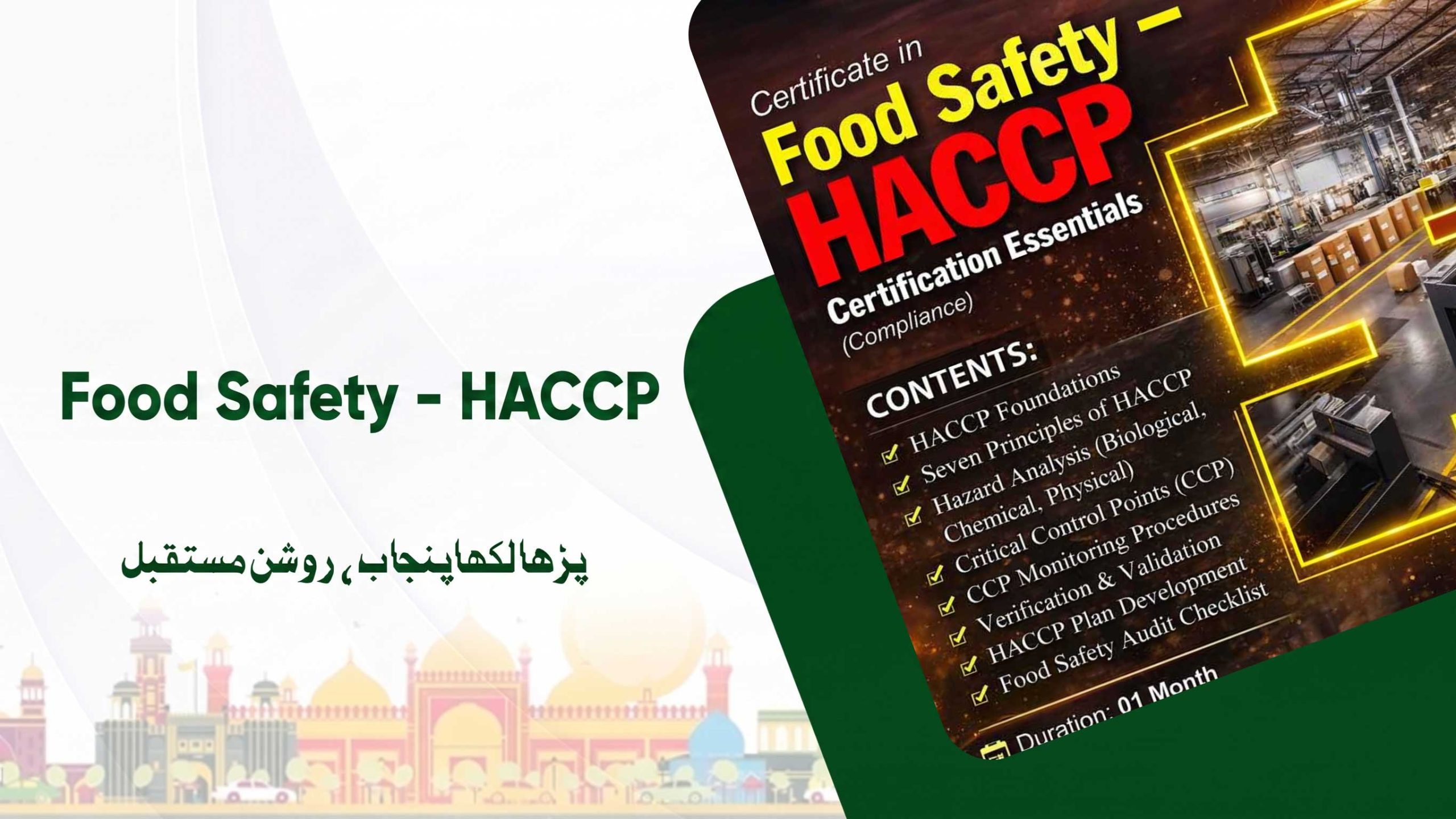
The Diploma in Food Safety – HACCP Certification Essentials is a specialized training program designed to provide essential knowledge of food safety management and hazard control systems used in the global food industry.
Food businesses must ensure that products are produced, handled, and distributed safely to protect consumers and meet international food safety regulations. One of the most widely recognized food safety systems used worldwide is Hazard Analysis and Critical Control Points (HACCP).
This course introduces learners to the principles of HACCP and teaches how to identify potential hazards in food production processes, implement preventive controls, and maintain high food safety standards. The HACCP system is widely supported by global organizations such as the Food and Agriculture Organization and the World Health Organization to improve food safety across the supply chain.
Food safety professionals are responsible for ensuring that food products are produced under hygienic conditions and meet strict safety requirements.
Through this course, students will learn how to:
 Understand the HACCP food safety management system
Identify biological, chemical, and physical food hazards
Apply critical control points in food production processes
Implement preventive food safety measures
Monitor food safety procedures and documentation
Maintain compliance with international food safety standards
These skills are highly valuable in food manufacturing companies, restaurants, hotels, catering services, and food processing industries.
During this program, students will gain knowledge in:
• Introduction to Food Safety Management
• Principles of HACCP (Hazard Analysis and Critical Control Points)
• Food Hazard Identification and Risk Assessment
• Critical Control Points (CCP) Monitoring
• Food Hygiene and Sanitation Practices
• Food Safety Documentation and Record Keeping
• HACCP Implementation in Food Production
• Introduction to international food safety standards such as ISO 22000
After completing the HACCP Certification Essentials Diploma, students can pursue roles such as:
• Food Safety Officer
• HACCP Coordinator
• Quality Control Inspector (Food Industry)
• Food Production Supervisor
• Food Safety Auditor
These career opportunities exist in food processing companies, restaurants, hotels, catering services, food export companies, and food quality assurance departments.
As the global food industry continues to grow, maintaining strict food safety standards has become essential for protecting consumer health and ensuring product quality.
The Diploma in Food Safety – HACCP Certification Essentials provides the knowledge and practical understanding needed to implement effective food safety systems and build a professional career in food safety management and quality assurance.